Fabric Expansion Joint

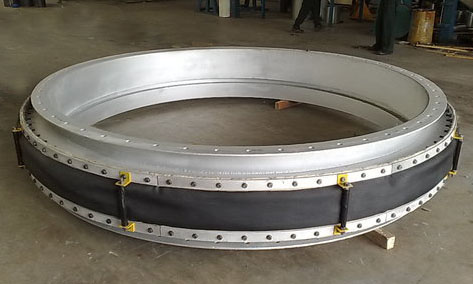
What is fabric expansion joints. Fabric expansion joints perform a function of compensating for duct misalignment and duct thermal growth typical in power plants and other ducting systems. Fabric expansion joints are found wherever is a need to convey hot media in low pressure applications such as “in flowing air” and “out flowing gas” in large combustion processes.

Fabric expansion joints can absorb larger movements than metal expansion joints and do so without spring loads. This is critical to limiting thermally induced stresses in ducting, ducting supports and related equipment.

How Does it Works?

A fabric expansion joints in inserted into a gap in the duct work where movement will occur.

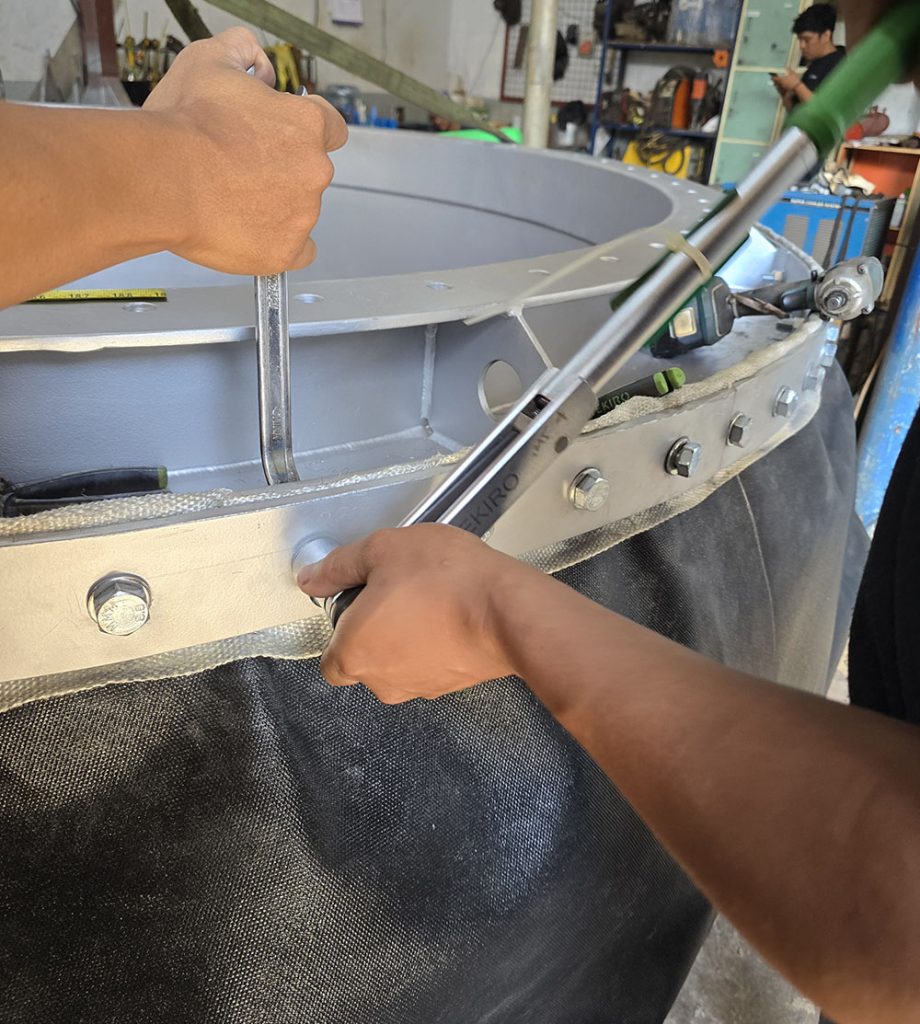
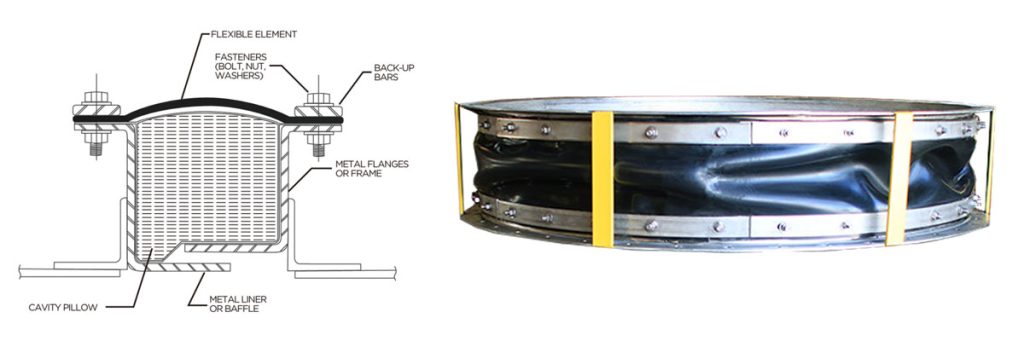
 A fabric expansion joints has two main components—the fabric gas seal and the metal frames. The fabric gas seal is a closed loop, like a belt, with its two edges clamped all around to the metal frames that are in turn connected to the end of ducting. As the ducting moves, the fabric belt deforms. 

The fabric material must do this without tearing or leaking while sometimes being exposed to high temperature and/or corrosive media.

In some instances, additional components such as insulation pillows, accumulation barriers or flow liners are utilized to help protect the fabric material.

Which type of expansion joint​

To use and its design is based in some fundamental considerations. It is necessary to state operating data and other conditions as detailed as possible to ensure maximum operating reliability.

Movements Alone or in combinations, are taken up by fabric expansion joint:

  • Axial Compression
  • Axial Extension
  • Lateral Offset
  • Angular Offset
  • Torsion

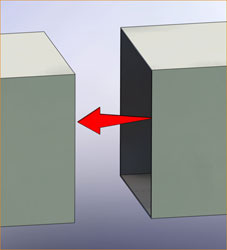
Axial Compression

The reduction in the breach opening along the axis of the duct. This is usually a result of thermal expansion of the ducting
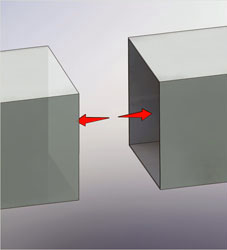
Axial Extension

The increase in the breach opening along the axis of the duct. In certain configurations, the duct thermal expansion may result in extension at the expansion joints location.
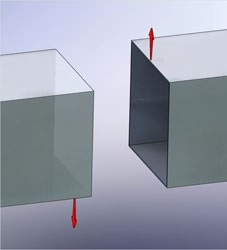
Lateral Movement

The relative movement of the upstream and downstream faces in the direction perpendicular to the axis of the duct.

Torsional Movement

The twisting of one side of the duct about the longitudinal axis.
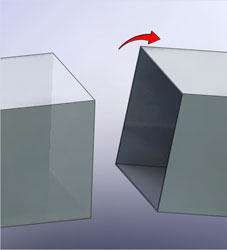
Angular Rotation

The twisting of one side of the duct about an axis perpendicular to the longitudinal axis.
Belt Type

The fabric belt is attached to the frame using a clamping system. The clamping system has the distinct advantage of sealing belt material in a line two to places across the frame flange.

Integrally Flanged Type

Same as belt type, layer of Expansion Joint filted directly to flange of ducting. Used pillow are base on service

Typical Construction of Fabric Expansion Joint

How can we help

Our experts are ready to assist you

Whatever your expansion joint needs are—from scratch manufacturing to finished products, or repairs to ensure maximum performance—we are here with the best experts and technology. Don’t hesitate to consult us and get the right solution for your project.